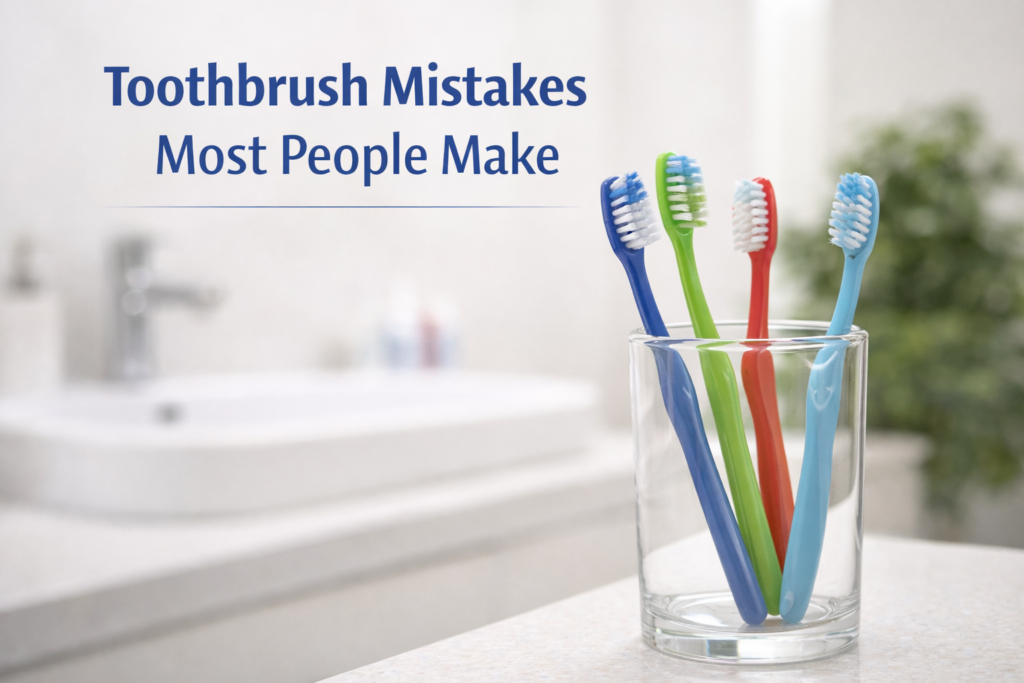
Toothbrush Mistakes Most People Make
Brushing your teeth is one of the simplest daily habits—but surprisingly, most people are doing it wrong. These small mistakes can lead to cavities, gum disease, bad breath, and even long-term dental problems.
At Dr. Tharejas Dental Clinic, under the expert guidance of Dr. Amit Thareja, patients often discover that correcting basic brushing habits can dramatically improve their oral health. If you’ve ever searched for a Dental Clinic Near Me, chances are you’re already taking steps toward better dental care—this guide will help you go even further.
Search Intent Analysis
People searching for “toothbrush mistakes” typically want to:
- Improve daily oral hygiene
- Prevent cavities and gum disease
- Learn correct brushing techniques
- Avoid expensive dental treatments
This blog addresses all of these concerns with actionable, expert-backed advice.
Why Proper Brushing Matters More Than You Think
Brushing is your first line of defense against:
- Plaque buildup
- Tooth decay
- Gum infections
- Bad breath
Even if you brush twice daily, doing it incorrectly can reduce its effectiveness. Visiting a Dental Clinic in Kalyani Nagar for routine checkups helps identify whether your brushing habits are actually protecting your teeth.
Most Common Toothbrush Mistakes People Make
1. Brushing Too Hard
Many people believe that brushing harder cleans better—but this is a myth.
What Happens:
- Enamel wears down
- Gums start receding
- Teeth become sensitive
What You Should Do:
Use gentle, circular motions with a soft-bristled brush.
2. Using the Wrong Toothbrush
Not all toothbrushes are created equal.
Common Mistake:
Using hard-bristled brushes thinking they clean better.
Better Choice:
- Soft or ultra-soft bristles
- Comfortable grip
- Proper head size for your mouth
Consulting the Best Dentist in Kalyani Nagar can help you choose the right toothbrush for your needs.
3. Not Brushing Long Enough
Most people brush for less than 1 minute, while dentists recommend at least 2 minutes.
Why It Matters:
Short brushing time leaves plaque behind, especially in hard-to-reach areas.
Tip:
- Divide your mouth into 4 sections
- Spend 30 seconds on each
4. Skipping the Gum Line
Plaque accumulates heavily near the gum line, yet many people focus only on teeth.
Result:
- Gum inflammation
- Bleeding gums
- Early gum disease
Solution:
Angle your brush at 45 degrees toward the gums.
5. Not Replacing Your Toothbrush Regularly
A worn-out toothbrush is ineffective.
When to Replace:
- Every 3–4 months
- Sooner if bristles are frayed
Patients visiting the Best Dental Clinic in Kalyani Nagar are often advised to check their toothbrush condition regularly.
6. Brushing Immediately After Eating
Brushing right after meals—especially acidic foods—can harm enamel.
Why:
Acids soften enamel temporarily.
What to Do:
Wait at least 30 minutes before brushing.
7. Ignoring the Tongue
Your tongue harbors bacteria that cause bad breath.
Mistake:
Skipping tongue cleaning entirely.
Fix:
Use a tongue scraper or brush gently over your tongue.
8. Using Too Much Toothpaste
More toothpaste doesn’t mean better cleaning.
Problem:
- Excess foam reduces visibility
- Leads to incomplete brushing
Ideal Amount:
- Pea-sized for adults
- Rice-sized for children
9. Not Cleaning Your Toothbrush
Your toothbrush can harbor bacteria if not cleaned properly.
Tips:
- Rinse thoroughly after use
- Store upright
- Let it air dry
10. Sharing Toothbrushes
This is a major hygiene mistake.
Risks:
- Transfer of bacteria
- Spread of infections
Always use your own toothbrush—no exceptions.
The Right Way to Brush Your Teeth
Step-by-Step Guide
Step 1: Choose the Right Brush
Soft bristles with a comfortable grip.
Step 2: Use Proper Technique
Gentle circular motions—not harsh scrubbing.
Step 3: Follow the 2-Minute Rule
Ensure complete cleaning.
Step 4: Cover All Areas
- Front teeth
- Back teeth
- Chewing surfaces
- Gum line
- Tongue
Step 5: Rinse and Store Properly
Keep your toothbrush clean and dry.
Signs You’re Brushing Incorrectly
- Bleeding gums
- Tooth sensitivity
- Bad breath
- Plaque buildup
- Receding gums
If you notice these signs, it’s time to consult professionals at Best Dentists Near Me in Kalyani nagar, Pune for guidance.
Impact of Poor Brushing Habits
Ignoring proper brushing can lead to:
- Cavities
- Gum disease (gingivitis, periodontitis)
- Tooth loss
- Expensive dental treatments
- Bad breath and low confidence
Regular visits to a trusted dental expert ensure early detection and prevention.
Professional Advice from Dr. Amit Thareja
According to Dr. Amit Thareja, most dental issues seen in clinics are preventable with proper brushing habits. At Dr. Tharejas Dental Clinic, patient education is a key focus—helping individuals adopt correct techniques for lifelong oral health.
When Should You Visit a Dentist?
Even if you brush correctly, regular dental visits are essential.
Visit Immediately If You Have:
- Persistent tooth pain
- Bleeding gums
- Sensitivity
- Bad breath
- Visible plaque or tartar
Searching for a reliable Dental Clinic Near Me ensures you receive timely care and expert advice.
Pro Tips for Better Oral Hygiene
- Brush twice daily
- Floss once a day
- Use mouthwash if recommended
- Stay hydrated
- Maintain a balanced diet
- Avoid excessive sugar
These habits, combined with correct brushing, can significantly improve your oral health.
People Also Ask (FAQs)
Q1. What is the most common toothbrush mistake?
Brushing too hard is one of the most common mistakes and can damage enamel and gums.
Q2. How often should I change my toothbrush?
Every 3–4 months or when bristles start to fray.
Q3. Is electric toothbrush better than manual?
Both are effective if used correctly, but electric brushes can help with consistency.
Q4. Should I brush after every meal?
No, especially after acidic foods. Wait at least 30 minutes.
Q5. Why do my gums bleed when I brush?
It could be due to gum inflammation or incorrect brushing technique. Consult a dentist if it persists.
Final Thoughts
Brushing your teeth may seem simple, but small mistakes can have a big impact on your oral health. By correcting these common errors, you can prevent major dental issues and maintain a healthy, confident smile.
Your toothbrush is a powerful tool—but only if used correctly.
Don’t let simple mistakes damage your smile.
Book your consultation today with Dr. Amit Thareja at Dr. Tharejas Dental Clinic and get expert guidance on improving your oral hygiene routine.
Your journey to healthier teeth starts with the right habits—take the first step today!