
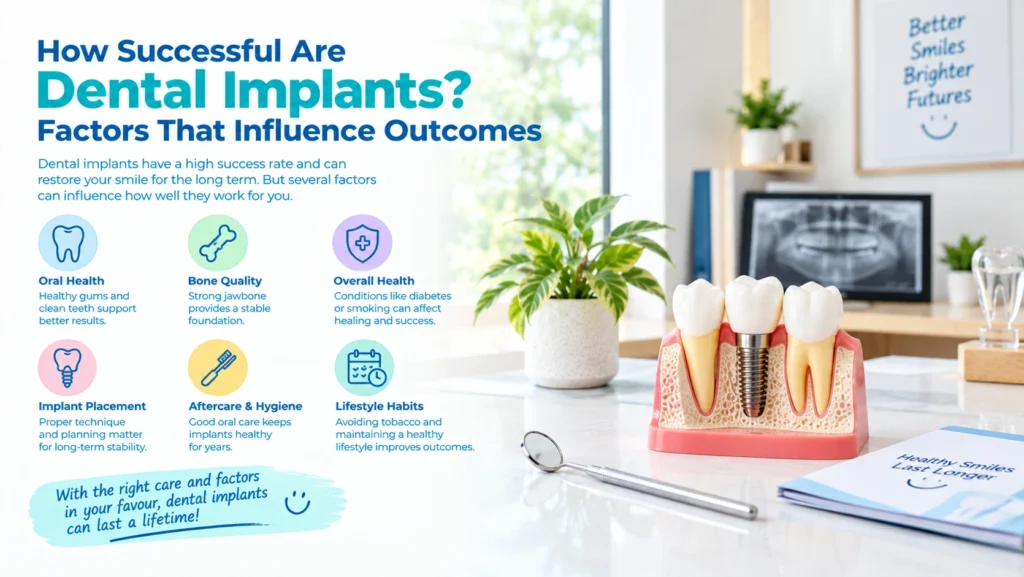
How Successful Are Dental Implants? Factors That Influence Outcomes
Missing teeth affect more than your smile. They change how you chew, speak, and even how your face looks over time. Dental implants have become the gold standard for tooth replacement, but many people still ask the same question before committing: how successful are they, really? This guide answers that clearly, explains what influences the outcome, and helps you decide whether implants are the right choice for you.
What Is a Dental Implant?
A dental implant is a small titanium post placed into the jawbone to act as an artificial tooth root. Over a few months, the post fuses with the bone through a process called osseointegration. Once healed, a custom-made crown is attached on top, giving you a replacement tooth that looks, feels, and functions like a natural one.
Unlike dentures or bridges, implants don’t rely on neighbouring teeth for support and help preserve jawbone density, which is why dentists often recommend them for long-term tooth replacement.
How Successful Are Dental Implants?
Dental implants have one of the highest success rates in modern dentistry. Studies consistently report success rates of around 95% to 98% when the procedure is planned and performed properly, and many implants last 15 to 25 years or even a lifetime with good care.
That said, success isn’t guaranteed for everyone. The result depends on a combination of patient health, clinical skill, and aftercare. Understanding these factors helps you set realistic expectations and improve your chances of a lasting outcome.
Key Factors That Influence Dental Implant Success
1. Jawbone Quality and Density
Implants need enough healthy bone to anchor securely. If you’ve lost significant bone after a long-standing missing tooth, a bone graft or sinus lift may be needed first. Skipping this step can compromise stability and lead to implant failure.
2. Oral Hygiene
Poor brushing and flossing habits allow bacteria to build up around the implant, causing peri-implantitis, an infection that damages the surrounding gum and bone. Good daily hygiene and regular dental check-ups are essential for long-term success.
3. Smoking and Lifestyle Habits
Smoking reduces blood flow to the gums and slows healing, making it one of the leading causes of implant complications. Quitting before and after surgery significantly improves outcomes.
4. Medical Conditions
Uncontrolled diabetes, autoimmune disorders, and certain medications can slow healing. This doesn’t automatically rule out implants, but it does mean your dentist will need to evaluate your overall health carefully before proceeding.
5. Gum Health
Active gum disease must be treated before implant placement. Healthy gums provide the foundation for a stable, long-lasting result.
6. Dentist’s Experience and Technique
Accurate diagnosis, 3D imaging, careful surgical planning, and precise placement all depend on the clinician’s expertise. This is often the single most important factor in whether an implant succeeds.
7. Quality of Implant Materials
Premium-grade titanium or zirconia implants from reputable manufacturers integrate better with bone and are less likely to cause complications compared with low-quality alternatives.
8. Post-Treatment Care
Following your dentist’s instructions after surgery, attending follow-up visits, and avoiding hard foods during healing all play a major role in how well the implant settles.
The Role of Location in Your Treatment Journey
Implant treatment isn’t a single visit. It involves consultation, imaging, surgery, healing, and crown placement across several months. Choosing a nearby provider makes follow-ups easier, and for East Pune residents, a Dental Clinic in Kalyani Nagar offers the convenience of regular monitoring without long commutes.
Why Specialist Expertise Matters
Placing an implant is a surgical procedure that requires training in bone assessment, soft tissue management, and prosthetic design. Working with an experienced implantologist in Kalyani Nagar means your treatment plan is built around your bone structure, bite, and long-term goals rather than a one-size-fits-all approach.
Dr. Amit Thareja brings years of clinical experience to implant dentistry, combining digital planning with a careful, patient-first approach. Each case begins with a thorough evaluation so that potential risks are identified and addressed before surgery, not after.
At Dr. Tharejas Dental Care, treatment is guided by 3D imaging, sterile protocols, and clear communication, so patients always know what to expect at every stage.
What to Look for in an Implant Clinic
When searching for the Best Dental Clinic in Kalyani Nagar, look beyond advertisements. A reliable clinic should offer detailed consultations, explain the full cost upfront, use quality implant systems, and provide proper post-surgical follow-up. Patient reviews and before-and-after case examples are also helpful indicators of consistent results.
For anyone specifically researching a Dental Implant In Kalyani Nagar, ask about the implant brand, the expected healing timeline, the warranty offered, and what is included in the quoted price, such as the crown and follow-up visits.
Choosing the Right Dentist for Long-Term Results
Many patients compare several options before deciding. When evaluating a Dentist In Pune for implant treatment, check qualifications, years of implant experience, and whether the clinic has digital imaging facilities. A transparent, unhurried consultation is usually a good sign of a trustworthy practice.
If you ever experience sudden pain, swelling, or a loose tooth, typing “Dental Clinic Near Me” into your search bar and getting seen quickly can prevent minor problems from becoming major ones.
Signs of a Healthy Implant
A successful implant should feel stable, cause no persistent pain, and allow normal chewing. Mild swelling and tenderness in the first few days are normal, but ongoing discomfort, bleeding, gum recession, or looseness should be examined promptly.
Frequently Asked Questions
1. What is the success rate of dental implants?
When performed correctly in suitable candidates, dental implants have a success rate of roughly 95% to 98%.
2. How long do dental implants last?
With proper care, implants can last 15 to 25 years or more. The crown may need replacement sooner due to normal wear.
3. Is the implant procedure painful?
The procedure is done under local anaesthesia, so most patients feel only mild pressure. Post-surgery soreness is usually manageable with prescribed medication.
4. Who is not a good candidate for implants?
People with severe uncontrolled health conditions, active gum disease, or insufficient bone may need preliminary treatment first. A clinical evaluation determines eligibility.
5. How long does the whole process take?
Treatment typically takes three to six months to allow the implant to fuse with the bone, though timelines vary based on whether bone grafting is required.
Book Your Implant Consultation Today
A missing tooth doesn’t have to be a permanent gap in your confidence. Schedule a consultation today to get a proper 3D evaluation, an honest assessment of your suitability, and a clear, transparent cost breakdown. Take the first step toward a stable, natural-looking smile that’s built to last.