
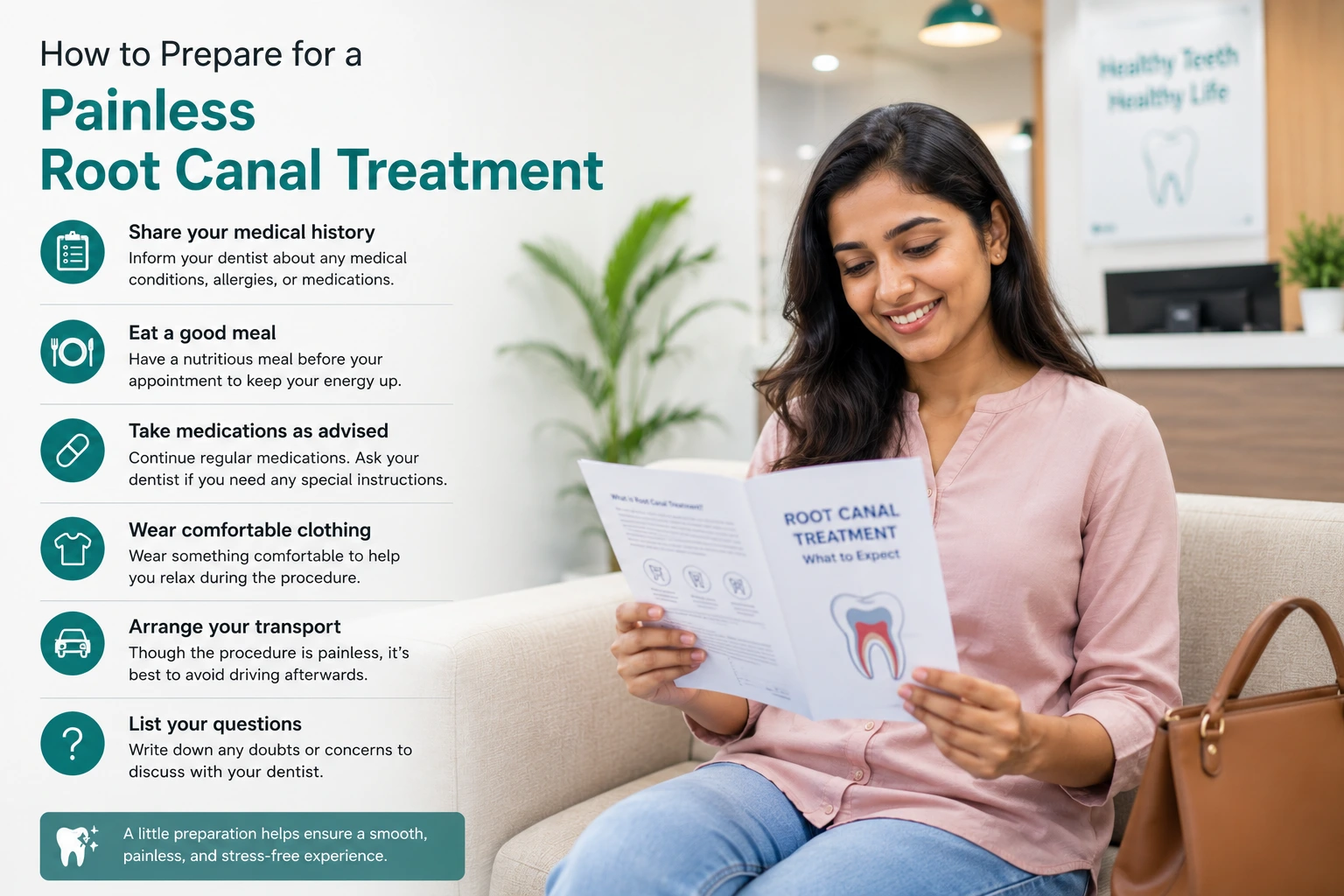
Root canal treatment is one of the most effective ways to save a severely damaged or infected tooth. Despite its reputation, modern root canal treatment is generally performed with local anesthesia and advanced dental techniques designed to keep patients comfortable throughout the procedure. Good preparation can make the experience even smoother. Knowing what to expect, discussing your concerns with your dentist, following pre-treatment instructions, and taking care of your oral health can all contribute to a comfortable treatment experience. At Dr. Tharejas Dental Care, Dr. Amit Thareja focuses on personalized dental care and patient comfort. If you have been advised to undergo root canal treatment, understanding how to prepare can help you approach your appointment with greater confidence. What Is Root Canal Treatment? A root canal is a dental procedure used to treat infection or inflammation inside a tooth. The inner part of a tooth contains the dental pulp, which consists of nerves and blood vessels. Deep decay, cracks, trauma, or repeated dental procedures can damage this tissue. During treatment, the dentist removes the infected or inflamed pulp, cleans and disinfects the root canals, fills the space, and seals the tooth. A crown may subsequently be recommended when the tooth needs additional structural protection. The primary objective is to eliminate infection while preserving the natural tooth whenever possible. Is Root Canal Treatment Painful? Fear of pain is one of the biggest reasons people postpone dental treatment. However, modern techniques and effective local anesthesia can make root canal treatment much more comfortable than many patients expect. Some tenderness or sensitivity may occur after the procedure, particularly when biting on the treated tooth. This is usually temporary and can often be managed with medication recommended by the dentist. If anxiety is preventing you from seeking care, discuss your concerns before treatment. Your dental team can explain each stage and help you feel more comfortable. How to Prepare Before Your Root Canal Appointment 1. Eat a Normal Meal Before the Appointment Unless your dentist has specifically advised otherwise, having a normal meal before treatment can be helpful. Root canal procedures may take some time, and eating beforehand can prevent you from becoming hungry during the appointment. Choose a balanced meal that is not excessively hard, sticky, or sugary. If you have been given specific instructions because of sedation or another medical consideration, follow those instructions instead. 2. Get Adequate Rest A good night’s sleep can help you feel more relaxed and prepared for your appointment. Try to avoid scheduling unnecessary stressful activities immediately before your dental visit. Arriving calm and well-rested can make the overall experience more comfortable. 3. Take Prescribed Medication as Directed If your dentist has prescribed antibiotics or other medication before treatment, take it exactly as instructed. Do not start antibiotics or pain medication on your own simply because you are concerned about discomfort. Your dentist should determine whether medication is appropriate for your condition. 4. Tell Your Dentist About Your Medical History Before treatment, inform your dentist about relevant medical conditions, allergies, medications, and previous reactions to dental anesthetics or medications. This information allows the dental team to plan treatment appropriately and safely. 5. Discuss Dental Anxiety If you are nervous about root canal treatment, tell your dentist before the procedure begins. Open communication can help your dentist explain: What will happen during treatment How anesthesia will be used How long the appointment may take What sensations you may experience What to expect afterward Understanding the process often reduces uncertainty and anxiety. Choosing the Right Dental Clinic Selecting an experienced dental professional is an important part of preparing for root canal treatment. Look for a clinic that prioritizes diagnosis, infection control, modern techniques, and patient comfort. If you are searching online for a Dental Clinic Near Me, consider factors such as the dentist’s experience, treatment approach, available technology, patient reviews, and the clinic’s focus on preventive and restorative dentistry. For patients in the area, a well-established Dental Clinic in Kalyani Nagar can provide convenient access to evaluation, treatment, and follow-up care. What Happens During Root Canal Treatment? Understanding the procedure can make it feel less intimidating. Step 1: Examination and Diagnosis Your dentist examines the tooth and may recommend dental X-rays to determine the extent of infection and understand the shape of the root canals. Step 2: Local Anesthesia Local anesthesia is administered to numb the affected tooth and surrounding area. This is an important part of maintaining patient comfort during treatment. Step 3: Removing the Infected Pulp A small opening is made in the tooth, allowing the dentist to access and remove the infected or inflamed pulp tissue. Step 4: Cleaning and Disinfection The root canals are carefully cleaned, shaped, and disinfected to remove bacteria and infected material. Step 5: Sealing the Canals The cleaned canals are filled with a suitable material and sealed to help prevent reinfection. Step 6: Restoring the Tooth Depending on the condition of the tooth, a permanent filling or dental crown may be recommended. A crown can provide additional protection to a weakened tooth and help restore normal function. What to Do After Root Canal Treatment Following your dentist’s instructions after treatment is important for a smooth recovery. Avoid Chewing Hard Foods Immediately If the tooth has not yet received its permanent restoration, avoid biting hard or sticky foods with it. This can help reduce the risk of damaging the tooth. Maintain Good Oral Hygiene Continue brushing and flossing regularly unless your dentist gives you different instructions. Keeping your mouth clean supports overall oral health. Take Medication Only as Recommended If medication is prescribed or recommended, follow the dosage and instructions provided by your dentist. Attend Your Follow-Up Appointment If a permanent crown or restoration has been recommended, do not delay the next appointment unnecessarily. The final restoration helps protect the treated tooth and restore its function. How to Reduce Dental Anxiety Before Treatment Dental anxiety is common, but there are practical ways to manage it. Consider: Asking questions before the procedure