
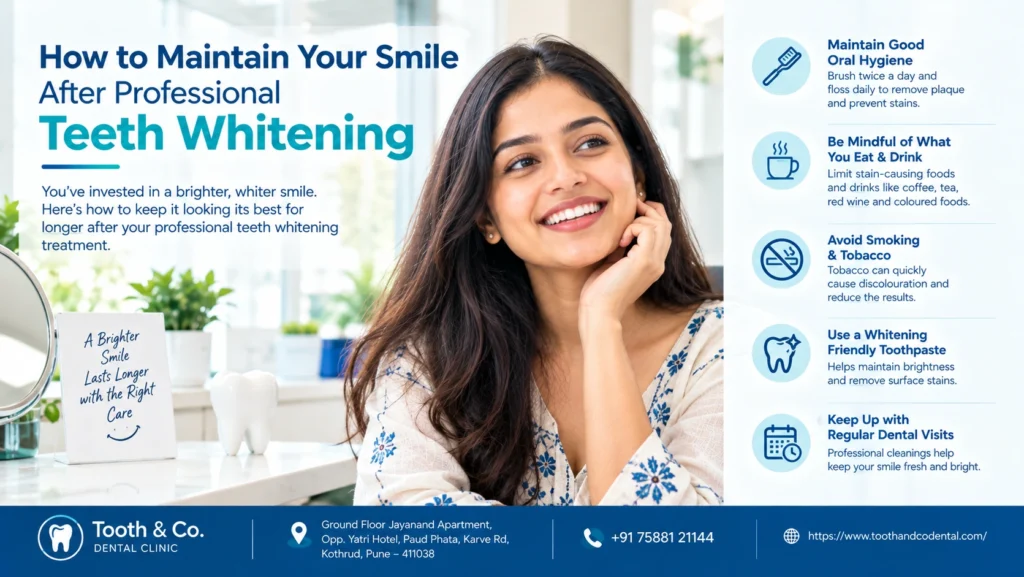
How to Maintain Your Smile After Professional Teeth Whitening
A professionally whitened smile can make your teeth look brighter and help you feel more confident. However, maintaining those results requires consistent oral hygiene and a few simple lifestyle adjustments. Teeth naturally become darker over time because of food, beverages, tobacco exposure, plaque buildup, and the normal aging process.
Professional whitening can provide noticeable results, but it is not a permanent change in tooth color. The good news is that proper aftercare can help your smile stay brighter for longer.
At Dr. Tharejas Dental Care, Dr. Amit Thareja provides personalized dental guidance to help patients maintain their oral health and protect the results of cosmetic dental treatments.
Search Intent: How Can You Keep Teeth White After Professional Whitening?
People searching for information about maintaining their whitened smile generally want practical answers to questions such as:
- How long will professional whitening results last?
- What foods and drinks should be avoided?
- Can I brush immediately after whitening?
- How often can I whiten my teeth?
- Does coffee cause teeth staining?
- What oral hygiene routine should I follow?
- When should I schedule a professional dental cleaning?
Understanding these factors can help you maintain your results without overusing whitening products.
1. Follow Your Dentist’s Post-Whitening Instructions
The first step after professional whitening is to follow the specific instructions provided by your dentist. Your teeth may temporarily become more sensitive after treatment, and your dentist can recommend appropriate products and habits based on your individual needs.
Avoid experimenting with multiple whitening products immediately after professional treatment. Excessive or inappropriate whitening may increase sensitivity and irritate your gums.
2. Be Careful With Staining Foods and Drinks
Certain foods and beverages contain pigments that can contribute to tooth staining.
Common examples include:
- Coffee
- Tea
- Red wine
- Cola and dark-colored soft drinks
- Soy sauce
- Tomato-based sauces
- Berries
- Dark chocolate
- Curry and strongly colored foods
You do not necessarily need to eliminate these foods permanently. However, moderating them and maintaining good oral hygiene can help reduce staining.
When possible, rinse your mouth with water after consuming strongly pigmented foods or drinks.
3. Limit Coffee and Tea Exposure
Coffee and tea are common causes of external tooth staining. If you regularly consume them, consider reducing the frequency or following them with water.
Using a straw for suitable cold beverages can also reduce direct contact between the drink and the front surfaces of your teeth.
Avoid adding excessive sugar to beverages because frequent sugar exposure can increase the risk of tooth decay.
4. Stop Tobacco Use
Smoking and tobacco products can cause significant tooth discoloration and negatively affect overall oral health.
Tobacco stains can accumulate on teeth and may make a recently whitened smile appear darker over time.
Avoiding tobacco is one of the most effective ways to protect both your whitening results and your long-term dental health.
5. Maintain an Effective Oral Hygiene Routine
Good oral hygiene is essential after professional whitening.
A simple routine should include:
Brush Twice a Day
Brush your teeth for approximately two minutes twice daily using a soft-bristled toothbrush and fluoride toothpaste.
Avoid brushing too aggressively because excessive pressure can contribute to enamel wear and gum irritation.
Floss Daily
Flossing removes plaque and food particles from areas that a toothbrush cannot reach.
Clean spaces between the teeth are particularly important for maintaining an even-looking smile.
Consider an Appropriate Whitening Toothpaste
A dentist may recommend a suitable whitening toothpaste for maintaining surface brightness. Whitening toothpastes primarily help remove certain surface stains rather than changing the natural color of the tooth.
6. Drink Plenty of Water
Water is one of the simplest ways to support oral health after whitening.
Drinking water can:
- Wash away food particles
- Reduce prolonged exposure to staining substances
- Support saliva production
- Help maintain a cleaner mouth
Choosing water instead of frequently consuming sugary or colored beverages can benefit both your teeth and gums.
7. Maintain Regular Dental Cleanings
Even with excellent home care, plaque and tartar can accumulate in difficult-to-clean areas.
Professional dental cleaning helps remove deposits and surface stains that regular brushing cannot completely eliminate.
Regular dental visits also allow your dentist to identify cavities, gum problems, enamel wear, or other conditions that may affect your smile.
If you are searching online for a Dental Clinic Near Me, consider choosing a dental practice that provides both preventive and cosmetic dental care.
8. Avoid DIY Whitening Remedies
Online whitening trends often recommend ingredients such as lemon juice, vinegar, charcoal, or baking soda.
These methods may not be suitable for regular use and can potentially damage enamel or irritate the gums when used incorrectly.
Professional whitening products are designed with controlled formulations and should be used according to dental recommendations.
If you want to maintain your whitening results, professional guidance is safer than repeatedly experimenting with home remedies.
9. Manage Tooth Sensitivity
Temporary sensitivity can occur after professional whitening.
If your teeth feel sensitive:
- Avoid extremely hot or cold foods
- Use toothpaste designed for sensitive teeth if recommended
- Avoid acidic beverages
- Follow your dentist’s aftercare instructions
Persistent or severe sensitivity should be evaluated by a dental professional because it may have another underlying cause.
10. Consider Professional Touch-Up Treatments
Whitening results naturally fade over time. The duration depends on factors such as diet, oral hygiene, tobacco use, age, and the original shade of the teeth.
Some patients may benefit from periodic professional touch-ups. The timing should be determined by your dentist rather than following a fixed schedule.
If you are considering Teeth whitening in Kalyani Nagar, a dental consultation can help determine whether professional whitening or a maintenance treatment is appropriate for you.
Can Dental Hygiene Affect Whitening Results?
Whitening and Dental Restorations
It is important to remember that professional whitening generally changes the color of natural tooth structure, not the color of existing restorations.
Crowns, veneers, fillings, and bridges may not respond to whitening in the same way as natural teeth.
If you have visible restorations and are planning cosmetic treatment, discuss your expectations with your dentist beforehand. A customized plan can help create a more harmonious overall smile.
When Should You Consider a Cosmetic Dental Consultation?
A cosmetic dental consultation may be appropriate if you have:
- Persistent tooth discoloration
- Deep or intrinsic stains
- Uneven tooth color
- Old dental restorations that no longer match
- Chipped or worn teeth
- Multiple cosmetic concerns
A Cosmetic Dentist in Kalyani Nagar can evaluate your teeth and discuss appropriate options based on your oral health and aesthetic goals.
What Can Cause Your Teeth to Become Stained Again?
Even after professional whitening, discoloration can gradually return because of:
Diet
Frequent consumption of highly pigmented foods and drinks can cause surface staining.
Tobacco
Smoking and tobacco products can cause stubborn discoloration.
Poor Oral Hygiene
Plaque and tartar can make teeth appear yellow or dull.
Aging
Natural changes in enamel and dentin can alter tooth color over time.
Certain Medications and Conditions
Some types of intrinsic discoloration may be associated with medications or dental development. These stains may not respond to conventional whitening in the same way as surface stains.
Why Professional Guidance Matters
Teeth whitening should be performed or recommended after considering your overall dental health.
Before cosmetic whitening, your dentist may check for:
- Cavities
- Gum disease
- Cracked teeth
- Tooth sensitivity
- Worn enamel
- Existing restorations
Treating underlying dental problems first can help make cosmetic treatment safer and more appropriate.
Patients looking for a Best Dentist in Kalyani Nagar should consider experience, treatment planning, communication, and the clinic’s approach to both oral health and cosmetic dentistry.
Maintaining Your Smile Long-Term
A brighter smile is easier to maintain when whitening becomes part of a broader oral health routine rather than an isolated cosmetic procedure.
Focus on:
- Brushing twice daily
- Flossing every day
- Drinking more water
- Limiting staining beverages
- Avoiding tobacco
- Scheduling regular dental check-ups
- Following professional whitening recommendations
- Addressing dental problems early
For patients seeking a Dentist In Pune, choosing a dental professional who can provide both preventive and cosmetic guidance can help support long-term smile health.
What About Dental Emergencies After Whitening?
Professional whitening is generally a routine cosmetic procedure, but unexpected symptoms should not be ignored.
Severe tooth pain, significant gum irritation, swelling, or dental trauma requires professional evaluation rather than additional whitening products.
If you experience an urgent dental problem, Emergency Dental Care in Kalyani Nagar can help determine the appropriate treatment and prevent a minor concern from becoming more complicated.
Frequently Asked Questions
How long do professional teeth whitening results last?
Results vary between individuals. Diet, oral hygiene, tobacco use, aging, and the type of whitening treatment can all influence how long the teeth remain brighter.
Can I drink coffee after teeth whitening?
Coffee can contribute to staining. Limiting consumption, rinsing with water afterward, and maintaining good oral hygiene can help reduce its effect on your smile.
Can I whiten my teeth every day?
Frequent whitening is not recommended unless specifically advised by your dentist. Overuse may increase tooth sensitivity and cause gum irritation.
Is whitening toothpaste enough to maintain professional whitening?
Whitening toothpaste can help remove certain surface stains, but it generally does not provide the same whitening effect as professional treatment.
Why are my teeth still yellow after whitening?
Some discoloration comes from inside the tooth and may not respond fully to conventional whitening. Your dentist can determine the cause and discuss alternative cosmetic treatments if necessary.
Can crowns and fillings be whitened?
Most dental restorations do not change color in response to conventional teeth whitening. Your dentist can advise you about color matching and restoration replacement if needed.
Give Your Whitened Smile the Care It Deserves
Professional teeth whitening can brighten your smile, but long-lasting results depend on what you do afterward. A consistent oral hygiene routine, sensible dietary choices, regular dental visits, and professional guidance can help you maintain a healthy-looking smile for longer.
At Dr. Tharejas Dental Care, Dr. Amit Thareja can assess your oral health and discuss suitable cosmetic and preventive dental options based on your individual needs.
If you have recently completed professional whitening or are considering treatment, schedule a consultation to learn how to maintain your results while protecting your teeth and gums.