
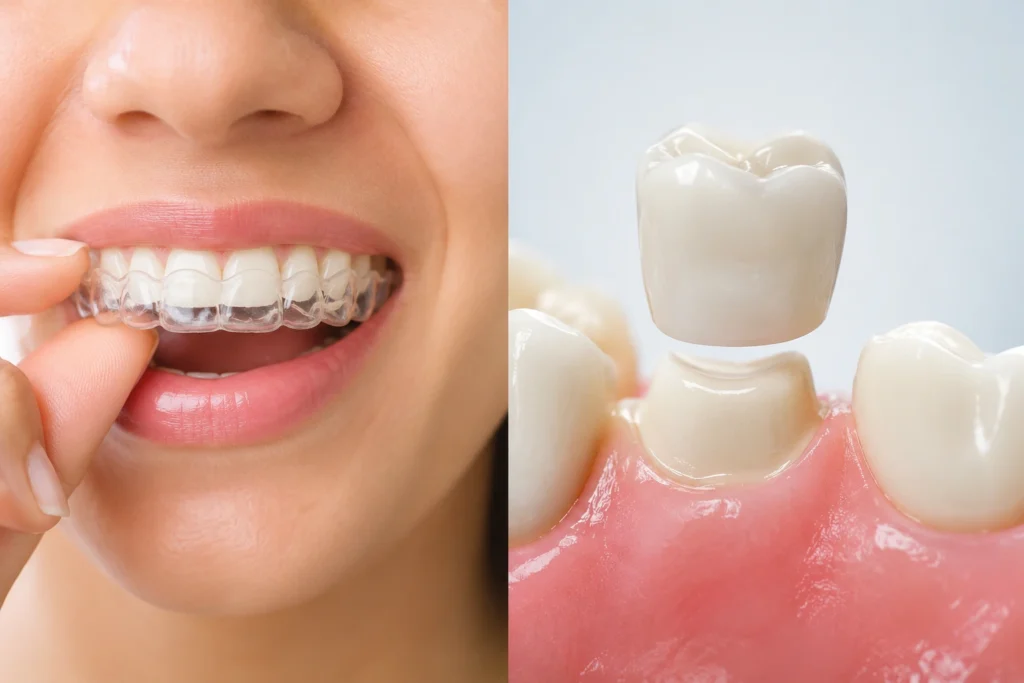
Invisible Braces and Dental Crowns: What You Need to Know
Missing alignment, chipped teeth, worn restorations, or existing dental crowns can make patients wonder whether they are suitable candidates for invisible braces. One of the most common questions dentists hear today is: “Can I straighten my teeth if I already have dental crowns?”
The good news is that in many cases, the answer is yes. Advances in modern orthodontics have made it possible for patients with dental crowns to achieve straighter teeth using clear aligners and invisible braces. However, treatment planning requires careful evaluation and expertise to ensure safe and effective results.
At Dr. Tharejas Dental Care, patients receive personalized orthodontic solutions designed around their unique dental conditions. Under the expert guidance of Dr. Amit Thareja, invisible braces and restorative treatments are carefully integrated to create healthy, functional, and beautiful smiles.
This guide explains everything you need to know about invisible braces and dental crowns, including how they work together, treatment considerations, benefits, and expected outcomes.
Understanding Invisible Braces
Invisible braces, commonly known as clear aligners, are transparent removable trays designed to gradually move teeth into their ideal positions.
Unlike traditional metal braces, invisible braces offer:
- A discreet appearance
- Greater comfort
- Removability during meals
- Easier oral hygiene maintenance
- Predictable treatment planning
These aligners are custom-made using advanced digital technology and are changed every few weeks as teeth gradually shift into alignment.
Many patients today choose Invisalign Treatment in Pune because it offers a comfortable and aesthetically pleasing alternative to conventional braces.
What Are Dental Crowns?
A dental crown is a custom-made cap placed over a damaged, weakened, or treated tooth to restore its:
- Shape
- Size
- Strength
- Appearance
- Function
Crowns are commonly recommended for:
- Severely damaged teeth
- Root canal-treated teeth
- Cracked teeth
- Large fillings
- Cosmetic smile improvements
Modern crowns can be made from porcelain, ceramic, zirconia, metal, or a combination of materials.
Can You Get Invisible Braces If You Have Dental Crowns?
Yes, in most cases, patients with dental crowns can successfully undergo invisible brace treatment.
Having one or more crowns does not automatically disqualify you from orthodontic treatment. However, your dentist must carefully assess:
- Number of crowns present
- Condition of the crowns
- Position of crowned teeth
- Gum health
- Bone support
- Bite alignment
A customized treatment plan ensures that tooth movement occurs safely without damaging existing restorations.
How Invisible Braces Move Teeth with Crowns
Many patients assume crowns cannot move because they are artificial restorations.
In reality, orthodontic treatment moves the entire tooth root within the jawbone—not just the visible crown portion.
This means:
- Natural teeth with crowns can still move
- The crowned tooth moves together with its root
- Properly bonded crowns generally remain stable during treatment
As long as the underlying tooth and supporting bone are healthy, clear aligners can effectively reposition crowned teeth.
Benefits of Invisible Braces for Patients with Crowns
Improved Smile Aesthetics
Many patients receive crowns to improve damaged teeth but may still have alignment concerns.
Invisible braces can help correct:
- Crowding
- Gaps
- Minor bite issues
- Uneven spacing
This creates a more balanced and attractive smile.
Comfortable Treatment
Clear aligners are smooth and custom-fitted, reducing irritation often associated with traditional braces.
Patients appreciate:
- No metal brackets
- No wires
- Minimal discomfort
- Easy removal when eating
Better Oral Hygiene
Because aligners are removable, patients can continue brushing and flossing normally around crowns and natural teeth.
This helps maintain:
- Crown longevity
- Gum health
- Overall oral hygiene
Predictable Results
Digital treatment planning allows patients to see anticipated results before treatment begins.
This improves confidence and helps set realistic expectations.
Important Factors Dentists Consider Before Treatment
Condition of Existing Crowns
Your dentist will first evaluate whether your crowns are:
- Properly fitted
- Structurally sound
- Free from decay underneath
- Securely bonded
Damaged or poorly fitting crowns may require replacement before orthodontic treatment begins.
Age of the Crown
Older crowns may have weakened bonding or wear that affects treatment planning.
In some cases, crowns nearing the end of their lifespan may be replaced after orthodontic treatment for optimal aesthetics.
Crown Material
Different crown materials respond differently to orthodontic attachments.
Common crown materials include:
- Porcelain
- Zirconia
- Ceramic
- Porcelain-fused-to-metal
Your orthodontist will determine the safest bonding approach based on the crown type.
Bite Alignment
A thorough bite analysis ensures that tooth movement will not place excessive stress on crowned teeth.
Advanced digital scans help orthodontists plan movements precisely.
Challenges of Invisible Braces with Crowns
Although treatment is highly successful for most patients, there are certain considerations.
Attachment Bonding
Clear aligner treatment often requires small attachments bonded to teeth.
Crowns may require specialized bonding techniques because orthodontic attachments adhere differently to restorative materials than natural enamel.
Complex Tooth Movements
Some movements may be more challenging for crowned teeth depending on:
- Root position
- Crown size
- Bone support
This is why detailed treatment planning is essential.
Existing Dental Work
Patients with multiple crowns, bridges, or implants may require modified orthodontic approaches.
An experienced orthodontic team can determine the safest treatment path.
Invisible Braces vs Traditional Braces for Crowned Teeth
Invisible Braces
Advantages:
- Nearly invisible appearance
- Removable
- Easier cleaning
- Greater comfort
- Digital treatment planning
Disadvantages:
- Requires patient compliance
- Not suitable for every complex case
Traditional Braces
Advantages:
- Effective for severe alignment issues
- Continuous force application
Disadvantages:
- More visible
- Harder to clean
- Greater irritation
For many adults with crowns, invisible braces provide an excellent balance of aesthetics and effectiveness.
What Happens If You Need a Crown During Orthodontic Treatment?
Sometimes a tooth may require restoration while orthodontic treatment is already underway.
In such situations, your dentist may:
- Place a temporary crown
- Modify aligners if necessary
- Adjust treatment sequencing
Coordination between restorative and orthodontic care ensures smooth treatment progress.
The Role of Digital Technology in Treatment Planning
Modern orthodontics relies heavily on digital technology.
Advanced tools include:
- Intraoral scanners
- 3D imaging
- Digital smile design
- Computerized aligner planning
These technologies help orthodontists evaluate crowns and surrounding structures with remarkable precision.
Patients searching for a Dental Clinic Near Me often prefer clinics that use digital treatment planning because it improves accuracy and comfort.
Can Dental Crowns Be Replaced After Orthodontic Treatment?
Yes. In some cases, replacing older crowns after orthodontic treatment can enhance smile aesthetics even further.
Reasons for crown replacement may include:
- Improved tooth alignment
- Better color matching
- Enhanced smile symmetry
- Updated restorative materials
Your dentist will advise whether replacement is beneficial after treatment completion.
Who Is a Good Candidate for Invisible Braces with Crowns?
You may be a suitable candidate if you have:
- Healthy gums
- Stable crowns
- Mild to moderate alignment concerns
- Adequate bone support
- Good oral hygiene habits
A comprehensive evaluation is necessary to determine eligibility.
Many patients seeking invisible braces in Kalyani Nagar are surprised to learn that existing crowns rarely prevent successful orthodontic treatment.
Importance of Choosing an Experienced Dental Team
Combining orthodontics with restorative dentistry requires expertise and careful planning.
Successful outcomes depend on:
- Accurate diagnosis
- Digital treatment planning
- Understanding crown biomechanics
- Personalized care
Patients often choose the Best Dental Clinic in Kalyani Nagar because comprehensive orthodontic and restorative services are available under one roof.
Long-Term Benefits of Straightening Teeth with Existing Crowns
Orthodontic treatment can provide significant long-term advantages:
Better Oral Health
Properly aligned teeth are easier to clean and maintain.
Improved Bite Function
Balanced bites reduce stress on teeth and restorations.
Enhanced Appearance
Straight teeth create a more harmonious smile.
Increased Restoration Longevity
Proper alignment helps distribute chewing forces more evenly, protecting crowns and natural teeth.
Crowns, Bridges, and Comprehensive Smile Restoration
Some patients have both alignment concerns and missing teeth.
In these situations, orthodontic treatment may be combined with crowns & bridges treatment in pune to create a fully restored smile that is both functional and aesthetically pleasing.
A multidisciplinary approach often produces the best long-term outcomes.
Why Modern Orthodontics Is More Patient-Friendly Than Ever
Today’s clear aligner systems provide:
- Faster treatment planning
- Greater comfort
- Improved aesthetics
- Digital progress tracking
- Customized smile design
Patients seeking treatment from an experienced Dentist In Pune increasingly choose invisible braces because they fit seamlessly into professional and social lifestyles.
Why Choose Dr. Tharejas Dental Care?
At Dr. Tharejas Dental Care, every orthodontic case is carefully evaluated to ensure safe tooth movement and optimal restorative outcomes.
Led by Dr. Amit Thareja, the clinic combines advanced digital technology, personalized treatment planning, and patient-focused care to deliver exceptional smile transformations.
Whether you have existing crowns, bridges, or cosmetic restorations, a customized treatment plan can help you achieve a healthier and more confident smile.
Patients looking for a trusted Dental Clinic in Kalyani Nagar can benefit from comprehensive orthodontic and restorative solutions tailored to their individual needs.
Frequently Asked Questions (FAQs)
Q1. Can invisible braces move teeth that have crowns?
Yes. Orthodontic treatment moves the tooth root within the bone, allowing crowned teeth to be repositioned in many cases.
Q2. Are crowns damaged during aligner treatment?
Properly fitted crowns are generally not damaged when treatment is carefully planned by an experienced dentist.
Q3. Will I need new crowns after orthodontic treatment?
Not always. Existing crowns may continue functioning well, although some patients choose replacements for improved aesthetics.
Q4. Do invisible braces work better than traditional braces for crowned teeth?
For many adults, invisible braces provide a comfortable, discreet, and effective solution, though treatment suitability varies by case.
Q5. How long does treatment take?
Treatment duration depends on alignment complexity and individual treatment goals, typically ranging from several months to over a year.
Conclusion
Invisible braces and dental crowns can successfully work together when treatment is planned by experienced dental professionals. Modern digital orthodontics allows many patients with crowns to achieve straighter teeth, improved bite function, and enhanced smile aesthetics without compromising existing restorations.
If you are considering clear aligners and have existing crowns, consulting a qualified dental professional is the best way to determine your treatment options. With expert care from Dr. Amit Thareja and the advanced orthodontic solutions available at Dr. Tharejas Dental Care, achieving a beautifully aligned smile is more accessible than ever.